Why did everyone wear hats back in the day?
- Larissa Bernardo

- Oct 1, 2019
- 4 min read
Hats changed with fashion, hairstyles, economic and social changes, wars and revolutions but one thing is certain: they were always around. Protection, status, and vanity have always been the prime reasons for wearing hats but now they have evolved to become accessories that mark essentially personality and lifestyle. But when did all start?
There aren't many records about the history of hats but it is known that ancient people such as the upper-class Egyptians used to wear hats for protection from strong sun, rain, cold etc.
However, when we think about hats in history, we have the image of Europeans in the Middle Ages wearing huge exquisite hats, don't we? Well, this is what I picture and I've always wondered why did hats become an expression of wealth and status. So I decided to do some research.
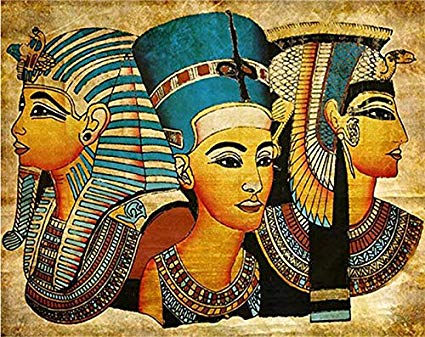
Sad news: no one understands for sure why hats became a thing. They were there throughout history, from Egyptians to Greeks to Middle Age Europeans. Hats were always there but changed a lot throughout time and if we think about the history of fashion, it makes sense hats became purely an accessory and not a protection gear. Why? Look carefully at the painting below:
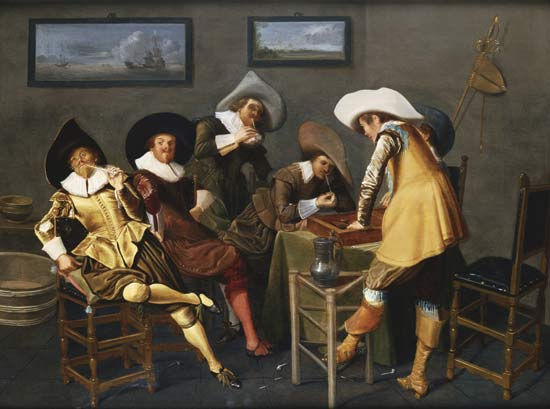
This painting is from 1627 and it's called 'Gentlemen Smoking and Playing Backgammon in an Interior'. The painter, Dirck Hals, was from the Netherlands and we didn't even need to know the name of the painting to tell he portrayed upper class men just because of way they're dressed. Look at the details of their clothes: They're wearing long socks, a pair of pants underneath other puffy pants, shirt, coat, the white accessory around the neck and hats. These men are not in a party, they're just playing a game. I think they spent approximately half an hour just to put the clothes on. We can tell these men really cared about the way they look, and nothing better to call the spotlight to themselves than a huge hat above their heads. Women and men from upper classes used to walk around wearing the most flashy garments possible because that showed who were the rich and who was in the working classes.
Before the 16th century, women wore different head coverings like veils, kerchiefs, hoods and caps. One of the most popular women headgear in the 15th-early 16th centuries was the 'Gable Hood Hat' (picture below). Structured hats for women similar to those of male courtiers began to be worn in the late 16th century.

Still in the 16th century, Anne Boleyn introduced the curved French hood into England. Then, in the late 16th century caps became fashionable. Upper class women wore ostrich feathers in their caps while low class women often wore a linen cap called a coif.
Fun fact: Kings and queens were similar to Hollywood celebrities today. People were obsessed about their clothes, shoes and accessories and everything they wore was immediately a fashion trend (in the upper classes).
One of the most popular women's hats in 18th century was a straw hat called 'Shepherdess' with a large brim as a protection from the sun, to give their face shade. Fashionable women also wore hats with plumes and flowers. There was also a different version of this hat with a strap that held the hat to their heads in a windy weather, which was very popular as well

In the 19th century new types of hats were invented and the Industrial Revolution made the mass production of women's and men's hats possible. In the first half of the 19th century, it was fashionable for women to wear bonnets that gradually became larger, decorated with ribbons, flowers and feathers. At the same time, The 'Bowler' hat, called 'Derby' in the United States, was the most popular type of hat amongst men. The Bowler was designed in 1849 at the height of the industrial revolution in Britain and it quickly became a classic wardrobe item. Named after John and William Bowler, hatters from Stockport, an industrial city in the north of England, it was the first mass-produced hat in history, according to Love to Know.
By the middle of the 1920's, when women began to cut their hair short, they preferred hats that hugged the head like a helmet, this is when the bell-shaped hat called 'Cloche' became popular.
When it's about women's hats, there were so many different types in the 20th century because every decade a new style would become popular and the hats would change with it. The most popular men's style of hat in the 20th century was definitely the 'Panama'. The Panama hat was the summer hat for the modern man in the twentieth century. The hat was flexible enough to be rolled into a narrow tube for packaging and transportation. Panama hats were handwoven in Montecristi, Ecuador and exported primarily to Panama, which gave the hat its name. Later on, when these hats started to get popular, they were shipped through the Panama Canal. Theodore Roosevelt, former president of the United States, wore a Panama hat in a visit to the Panama Canal construction, which made the hat even more popular. Below you can see women wearing 'Cloche hats' and men wearing 'Panama hats'.
In the 1960's the hats became an old-fashioned accessory and youngsters stopped wearing them as before. Since then, hats aren't worn as before and they are merely fashion accessories. There are seasons when hats are trendy, as we could see this month in the fashion weeks around the world, but nothing compares to the power hats had back in the day.
I personally like them and think they're a fancy accessory that goes really well with specific outfits but also think they're not comfortable at all and hard to wear in windy places, such as Melbourne :(
After all, I feel sad there isn't an explanation for the huge popularity of hats so I'll just have to accept my own theories as true.


Comments